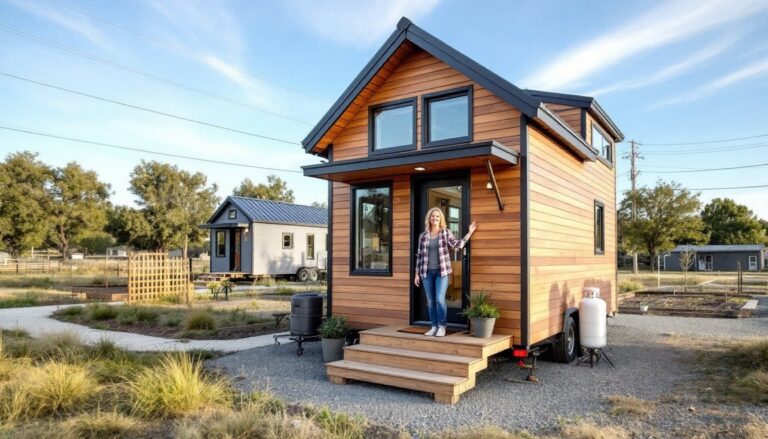
Tennessee’s rolling hills, mild climate, and lower cost of living have turned it into a hotspot for tiny home enthusiasts looking to downsize without sacrificing quality of life. Unlike scattered individual builds, tiny home communities offer shared amenities, social connections, and streamlined permitting, all while keeping monthly expenses manageable. Whether someone’s eyeing East Tennessee’s mountain views or Middle Tennessee’s proximity to Nashville, buying into an established community can simplify the entire process. This guide walks through what makes Tennessee ideal for tiny living, what to scrutinize before signing paperwork, and which communities are currently offering lots or turnkey homes for sale.
Table of Contents
ToggleKey Takeaways
- Tennessee’s lack of state income tax, low property taxes, and affordable land prices make tiny home communities in Tennessee highly attractive for downsizers, retirees, and remote workers seeking cost-effective living.
- When evaluating tiny home communities for sale, prioritize infrastructure verification (water, sewer, electrical), review HOA covenants and rules, and assess proximity to essential services and reliable internet before committing.
- Financing tiny homes typically requires personal loans, RV loans, or in-house builder financing rather than traditional mortgages, as most lenders classify homes under 400 square feet as personal property.
- Tennessee’s lack of statewide tiny home building codes creates a regulatory patchwork, so verify local county zoning laws, minimum square footage requirements, and foundation standards before purchasing or building.
- Top tiny home communities range from East Tennessee’s scenic Smoky Mountain developments (lots from $45,000) to Middle Tennessee’s remote-worker-friendly communities near Nashville (turnkey homes from $85,000) to West Tennessee’s affordable build-your-own subdivisions ($20,000–$30,000).
- Specialized insurance and careful property tax classification are essential for tiny home owners, as standard policies often exclude these properties and tax treatment varies significantly between permanent foundations and mobile structures.
Why Tennessee Is a Top Destination for Tiny Home Living
Tennessee’s appeal goes beyond scenic views and country music. The state has no income tax, which stretches retirement savings and part-time incomes further. Property taxes remain relatively low compared to coastal states, and land prices, especially outside metro areas, make it feasible to buy into a community without draining savings.
The climate plays a role, too. Winters are mild enough that heating loads stay manageable in well-insulated tiny homes, and summers, while humid, don’t require the heavy-duty HVAC systems needed in desert states. That translates to lower utility bills and simpler mechanical systems.
Zoning attitudes vary by county, but Tennessee has seen a shift toward tiny-home-friendly ordinances, especially in areas courting tourism and retirement demographics. Some counties classify tiny homes on foundations as accessory dwelling units (ADUs), while others allow them in planned communities with shared infrastructure. It’s not a free-for-all, more on legal hurdles later, but the regulatory climate is friendlier than in states with stricter minimum square footage requirements.
Cultural fit matters, too. Tennesseans tend to value self-sufficiency and practical living, which aligns with the tiny home ethos. Communities often attract a mix of retirees, remote workers, and folks seeking a slower pace without total isolation.
What to Look for When Buying in a Tiny Home Community
Not all tiny home communities are created equal. Start with infrastructure fundamentals: water, sewer, and electrical hookups. Some communities offer full RV-style hookups (30- or 50-amp service), while others require homes on permanent foundations with traditional utilities. Confirm whether the community uses well water or municipal supply, and whether sewer is handled via septic, shared treatment, or city lines. These details affect both upfront costs and ongoing maintenance.
Check the HOA or community rules. Many tiny home developments have covenants governing exterior finishes, minimum square footage (ironically), and whether homes must be owner-occupied or can be rented short-term. Some communities ban THOW (tiny homes on wheels) entirely, requiring homes to be anchored on frost footings or slab foundations. Read the fine print before falling in love with a lot.
Amenities vary widely. Basic communities might offer shared green space and a gravel road: others include clubhouses, workshop spaces, or walking trails. Evaluate whether those extras justify higher lot fees or HOA dues. A $200/month HOA might seem steep until realizing it covers road maintenance, trash service, and snow removal.
Proximity to services matters more in a tiny home than a traditional house. With limited storage, frequent grocery runs become the norm. Check drive times to supermarkets, urgent care, and hardware stores. Reliable internet is non-negotiable for remote workers, confirm whether the community has fiber, cable, or relies on satellite (which can be spotty in Tennessee’s valleys).
Finally, visit in person. Photos lie. Walk the lots, talk to current residents, and gauge whether the vibe matches expectations. Some communities skew heavily toward retirees: others attract younger, off-grid types. Neither is better, but fit matters when sharing common spaces.
Top Tiny Home Communities for Sale in Tennessee
East Tennessee Communities
East Tennessee’s Smoky Mountain foothills offer some of the state’s most scenic tiny home communities. Smoky Mountain Tiny House Village near Sevierville caters to both full-time residents and vacation rentals, with lots ranging from 0.15 to 0.25 acres. The community requires homes on permanent foundations, with minimum dimensions of 200 square feet and maximum of 600. Shared amenities include a pavilion and hiking trails. Lot prices start around $45,000, with developed infrastructure (water, sewer, electric) already stubbed to each site.
Further north, Appalachian Tiny Homes Community in Greene County offers larger lots (0.5 acres average) with more flexibility for THOW setups. The community allows both permanent foundations and homes on trailer frames, provided they meet Tennessee’s tie-down requirements for wind resistance. Lot leases run $350/month, with an option to purchase after five years. The trade-off: infrastructure is less polished, with well water and septic rather than municipal services.
Middle and West Tennessee Communities
Middle Tennessee’s proximity to Nashville drives demand. Music City Tiny House Village in Wilson County sits 30 minutes east of downtown Nashville and markets heavily to remote workers and creative types. The community features modern farmhouse aesthetics, with design guidelines requiring board-and-batten or lap siding and metal roofing. Lots are smaller (averaging 0.12 acres) but include fiber internet and community gardens. Turnkey homes start at $85,000 for a 300-square-foot shell: developed lots alone run $55,000.
For those eyeing retirement-friendly communities, Buffalo River Tiny Estates in Middle Tennessee blends tiny home living with age-restricted amenities. The development requires one resident to be 55 or older and offers accessible design options, including zero-step entries and wider doorways (36 inches minimum) to accommodate mobility aids. Lots include full hookups and start at $62,000.
West Tennessee options are sparser but emerging. Volunteer Acres near Jackson offers build-your-own lots on 1-acre parcels with minimal restrictions. It’s less a traditional “community” and more a zoning-friendly subdivision where tiny homes are explicitly allowed. Buyers handle their own septic design and well drilling, which keeps lot prices low ($20,000–$30,000) but requires more upfront legwork and permitting coordination.
Financing Your Tiny Home Purchase in Tennessee
Traditional mortgages rarely cover tiny homes, especially THOW builds. Most lenders view homes under 400 square feet or on trailer frames as personal property, not real estate, which disqualifies them from conventional loan products. That leaves a few paths.
Personal loans work for smaller builds. Rates run higher (8%–12% APR as of early 2026) and terms cap around seven years, but approval is faster and doesn’t require property appraisal. Loan amounts typically max out at $50,000, suitable for basic shells or used models.
RV loans apply if the tiny home is certified by the Recreational Vehicle Industry Association (RVIA). Rates hover around 6%–9%, with terms stretching to 15 years for higher loan amounts. The catch: the home must remain titled as an RV, which can complicate insurance and property tax classification.
Some builders offer in-house financing, especially for turnkey models. Terms vary wildly, scrutinize interest rates and prepayment penalties. It’s worth comparing against credit union options, which sometimes extend better rates for members.
If buying a lot separately, land loans are an option, though they require 20%–30% down and carry higher rates than home mortgages. Once the lot is paid off or substantially paid down, a construction loan can fund the build, converting to a permanent mortgage if the finished home meets minimum square footage and foundation requirements (typically 400+ square feet on a permanent foundation).
Cash purchases remain common in the tiny home world. For those liquidating a larger property to downsize, paying outright avoids financing headaches entirely. Just ensure enough reserves remain for site prep, utility hookups, and the inevitable budget overruns.
Zoning Laws and Legal Considerations in Tennessee
Tennessee has no statewide tiny home building code, leaving regulations to county and municipal governments. That creates a patchwork. Some counties embrace tiny homes as ADUs on existing residential lots: others ban anything under 600 square feet outright.
Start by contacting the county building and zoning department. Ask three questions: What’s the minimum square footage for a primary dwelling? Are tiny homes on wheels classified as RVs (and if so, can they be used as primary residences)? Are there specific zoning districts or overlay zones where tiny homes are permitted?
Many Tennessee counties require tiny homes on permanent foundations to meet the International Residential Code (IRC) Appendix Q, which outlines standards for homes under 400 square feet. Compliance includes egress window sizing, ceiling height minimums (6’8″ in living areas, 6’4″ in bathrooms and kitchens), and stair/ladder specifications. Homes on wheels often bypass these codes but face restrictions on where they can be parked long-term.
Permits are non-negotiable for foundation work, electrical, and plumbing. Expect to submit engineered foundation plans (even for pier-and-beam setups) and pass inspections at footing, framing, rough-in, and final stages. Electrical work must meet National Electrical Code (NEC) standards, most jurisdictions require a licensed electrician for anything beyond basic outlet installation. Plumbing inspections focus on venting, drain slope, and backflow prevention, especially for homes on septic systems.
Some communities have seen interest in tiny homes tailored for retirement, with designs emphasizing accessibility and lower maintenance. Modern approaches to compact living continue to evolve, as showcased on platforms like Dwell, which highlights innovative small-space solutions. For practical decorating and layout tips, Apartment Therapy offers extensive advice on maximizing limited square footage.
Insurance can be tricky. Standard homeowners policies often exclude tiny homes, especially THOW models. Specialized tiny home insurance providers cover both the structure and contents, but shop carefully, coverage limits and exclusions vary. Verify whether the policy covers the home during transport (if applicable) and whether it includes liability for visitors.
Property taxes depend on classification. Tiny homes on permanent foundations are taxed as real property: those on wheels may be taxed as personal property (like an RV) or escape taxation altogether in some counties. Clarify this upfront to avoid surprises when the first tax bill arrives.