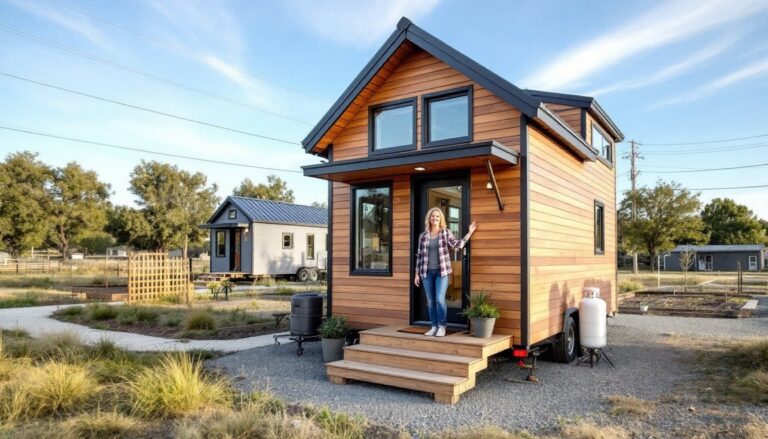
Buying a tiny home trailer isn’t just about downsizing, it’s about portability, freedom, and owning your space without committing to a foundation. Whether someone’s chasing financial flexibility, preparing for retirement, or seeking a mobile workshop or guest suite, a trailer-mounted tiny home offers mobility that traditional construction can’t match. But the market’s flooded with options ranging from bare-bones shell trailers to fully outfitted turnkey homes, and not all are built to DOT standards or designed for long-term living. This guide breaks down what to look for, where to buy, and how to avoid costly mistakes when shopping for a tiny home trailer in 2026.
Table of Contents
ToggleKey Takeaways
- A tiny home trailer for sale ranges from $4,500 for bare frames to $120,000+ for fully customized turnkey homes, with most DIY-finished options between $25,000–$50,000.
- Prioritize trailers with steel I-beam frames, dual axles, proper GVWR ratings (10,000–14,000 lbs), and electric brakes to ensure safe towing and long-term durability.
- Closed-cell spray foam insulation, dual-pane windows, and PEX plumbing are essential features for mobile structures that withstand road vibration and maintain energy efficiency.
- Financing a tiny home trailer requires RV loans (6–10% rates), chattel mortgages, or builder financing since standard mortgages don’t apply to mobile structures.
- Research zoning laws and parking regulations in your target location before purchasing—many areas classify tiny home trailers as RVs or ADUs with specific restrictions on placement.
- Buy directly from manufacturers or established turnkey builders rather than general RV dealers to ensure the trailer meets residential building codes and IRC Appendix Q standards.
What Is a Tiny Home Trailer and Why Choose One?
A tiny home trailer is a specialized heavy-duty flatbed trailer designed to carry a residential structure, typically ranging from 16 to 30 feet in length. Unlike standard utility trailers, these are engineered with reinforced steel frames, dual axles (sometimes triple), and a lower deck height to accommodate building codes while staying within DOT road height limits, usually a 13’6″ maximum including the structure.
These trailers use trailer-specific construction techniques: double or triple 2×6 floor joists instead of standard framing, hurricane ties to resist movement, and flexible plumbing/electrical systems that can handle road vibration. The trailer itself becomes the foundation, which means no concrete slab, no frost footings, and no permanent property commitment.
Why go with a trailer-mounted tiny home? Mobility is the obvious win, move for work, climate, or opportunity without selling. It also sidesteps most local zoning restrictions since many jurisdictions classify them as RVs rather than permanent dwellings (though this varies widely and requires research). Financially, it eliminates land purchase and can reduce property taxes, though parking and utilities require planning.
Be honest about the trade-offs: trailers limit floor plan options due to road width restrictions (8’6″ is the max without permits), and structural loads must stay within the trailer’s GVWR (gross vehicle weight rating). Most tiny home trailers are rated between 10,000 and 14,000 lbs, meaning the finished home, frame, siding, fixtures, furniture, occupants, must stay under that limit. Overloading risks axle failure, tire blowouts, and legal trouble during transport.
Types of Tiny Home Trailers Available for Sale
The tiny home trailer market splits into three main categories: bare trailers, shell kits, and turnkey homes. Each serves different skill levels and budgets.
Bare trailers are the starting point for DIY builders. These come as a steel frame with axles, wheels, and a tongue, but no subfloor or framing. Expect to pay $4,500–$8,000 depending on length and axle count. Brands like Iron Eagle and Tiny Home Builders offer trailers specifically engineered for residential loads, with lower deck heights (often 36″ or less) and reinforced crossmembers spaced for floor joist attachment. If someone’s comfortable with framing and has access to a welder for custom brackets, a bare trailer offers maximum design freedom.
Shell trailers include the subfloor, wall framing, roof trusses, and exterior sheathing, but no interior finishes, plumbing, or electrical. These run $12,000–$25,000 and save weeks of framing labor. They’re ideal for builders who want structural integrity handled but still want to customize finishes, layout, and systems. Some shells come with windows and exterior doors installed: others leave those to the buyer.
Shell Trailers vs. Turnkey Tiny Homes
Shell trailers appeal to DIYers with moderate skills, someone who can run electrical conduit, install a mini-split HVAC, and finish drywall but doesn’t want to engineer a trailer from scratch. Shells typically come on a trailer rated for the expected finished weight, with engineered plans that meet IRC Appendix Q (the tiny house code appendix) where applicable.
Turnkey tiny homes are move-in ready: plumbing roughed in or complete, electrical wired and inspected, appliances installed, and finishes done. Pricing starts around $50,000 for basic models and climbs past $100,000 for custom builds with high-end materials, lofted sleeping areas, full-size appliances, and off-grid systems like solar arrays and composting toilets. Turnkey homes save time and reduce risk, buyers get a code-compliant structure with warranties on major systems. The downside is limited customization and higher upfront cost. Many turnkey sellers, as seen with offerings on platforms focused on small space living, showcase homes that balance design and function, but buyers should verify build quality and towing specs before committing.
How Much Does a Tiny Home Trailer Cost in 2026?
Costs vary wildly depending on build level, materials, and whether the buyer’s doing the work or hiring it out. Here’s a realistic breakdown as of early 2026:
- Bare trailer only: $4,500–$8,000 (20–24 ft trailer, dual axle, 10,000 lb GVWR)
- Shell kit on trailer: $12,000–$25,000 (framed, sheathed, roof on, no interior)
- DIY-finished home on trailer: $25,000–$50,000 (owner does most interior work: materials, fixtures, appliances included)
- Turnkey tiny home: $50,000–$120,000+ (professionally built, code-compliant, ready to tow)
Material costs have stabilized compared to the 2021–2023 spike, but lumber, metal roofing, and windows remain 20–30% higher than pre-pandemic pricing. A basic 20-foot shell with LP SmartSide siding, architectural shingle roof, and standard windows runs about $18,000 in most regions. Upgraded materials, metal siding, standing seam roof, triple-pane windows, add $5,000–$10,000.
Interior finishes are where budgets balloon. Plumbing for a wet bath, kitchenette, and on-demand water heater runs $2,500–$4,000 in parts (more if hiring a plumber). Electrical, including a breaker panel, wiring, outlets, and a mini-split HVAC, costs $1,500–$3,000 DIY, or $5,000–$7,000 with a licensed electrician. High-efficiency appliances (induction cooktop, apartment-size fridge, combo washer/dryer) add another $2,000–$4,000.
Don’t forget transport costs if buying out of state. Professional tiny home movers charge $3–$5 per mile with a typical minimum of $1,000. A 500-mile move runs $1,500–$2,500. DIYers with a ¾-ton or 1-ton truck and towing experience can handle shorter moves, but anything over 10,000 lbs requires trailer brakes and a brake controller, budget $300–$600 for the controller and installation.
Where to Buy Tiny Home Trailers: Best Sources and Marketplaces
Direct from manufacturers offers the most control and often the best warranties. Companies like Tiny Home Builders, Iron Eagle Trailers, and Tennessee Tiny Homes build trailers to tiny-house specs and ship nationwide. Expect 6–12 week lead times and delivery fees of $500–$2,000 depending on distance. Buying direct ensures the trailer’s engineered for residential loads, with proper tongue weight distribution and frame reinforcement.
Turnkey builders like Mint Tiny House Company, New Frontier Tiny Homes, and Tumbleweed sell completed homes. Many list current inventory online, for example, a recent double-loft model offered move-in-ready status on a 26-foot trailer. These builders often provide financing options and can customize layouts before construction starts. Delivery is typically included within a certain radius: long-distance buyers pay per-mile rates.
Used marketplaces like Tiny House Listings, Facebook Marketplace, and Craigslist feature both trailers and finished homes. Prices on used shells run 30–50% below new, but inspect carefully: check for frame rust, axle wear, and whether the trailer’s titled and tagged. Many states require trailers over a certain weight to be registered and inspected annually. A title issue can turn a bargain into a legal headache.
RV and tiny home shows offer hands-on comparison. Builders display current models, and buyers can walk through multiple layouts in one day. Shows also attract used sellers looking to move inventory quickly. Negotiating at a show, especially on the last day, can knock 5–10% off asking prices.
Be cautious with general RV dealers, most stock trailers built to RVIA standards (Recreational Vehicle Industry Association), which are less stringent than residential building codes. RVIA trailers use thinner wall studs, stapled construction, and materials not designed for full-time living. If long-term durability matters, prioritize trailers built to IRC Appendix Q or local building codes, even if they cost more upfront.
Essential Features to Look for When Buying
Start with the trailer frame and axles. A quality tiny home trailer uses a steel I-beam or C-channel frame, not angle iron, with crossmembers every 12–16 inches. Axles should be rated for the expected total weight, if the finished home will weigh 12,000 lbs, the trailer needs at least a 14,000 lb GVWR to allow for a safety margin. Electric brakes on all wheels are non-negotiable for anything over 3,000 lbs: check that the wiring harness and breakaway system are included.
Tongue weight should be 10–15% of total weight for stable towing. Poorly balanced trailers, too much weight at the rear, fishtail at highway speeds. Builders should provide a weight distribution plan or load diagram.
Roof design affects both aesthetics and function. Gable roofs maximize interior loft space but increase total height, factor in the 13’6″ road limit. Shed roofs (single slope) are simpler to frame and often allow higher ceilings on one side. Metal roofing (standing seam or corrugated) holds up better to road vibration than shingles, though shingles are cheaper and easier to DIY.
Insulation and moisture barriers matter more in a mobile structure. Closed-cell spray foam (R-6 to R-7 per inch) is ideal for walls and roof, it insulates, air-seals, and adds racking strength. Expect to pay $3–$4 per square foot for professional spray foam. Budget alternatives include rigid foam board (R-5 per inch) combined with batt insulation, but air-sealing requires careful taping and caulking. Skip fiberglass batts alone, they compress during transport and allow moisture infiltration.
Windows and doors should be dual-pane minimum (triple-pane in cold climates) with welded vinyl or fiberglass frames. Tempered glass is required by code in certain locations (near doors, in bathrooms). RV-style windows are lightweight and watertight but look utilitarian: residential windows look better but add weight.
For those considering a tiny home as part of a long-term downsizing plan, features like accessible entries and main-floor sleeping become priorities, similar to considerations in planning for retirement.
Electrical and plumbing rough-ins save time if done by the builder. Look for 30-amp or 50-amp RV-style shore power hookup if the home will connect to campground pedestals, or a standard 100-amp breaker panel for permanent hookups. PEX plumbing is flexible, freeze-resistant, and handles road vibration better than rigid copper. On-demand (tankless) water heaters save space and weight compared to tank models.
Financing and Legal Considerations for Your Purchase
Financing a tiny home trailer is trickier than a traditional mortgage. Most lenders classify them as RVs or personal property, not real estate, which means higher interest rates and shorter loan terms. RV loans through credit unions or specialized lenders (e.g., LightStream, Essex Credit) offer rates around 6–10% for 10–15 year terms, depending on credit score. Some lenders require the home to be RVIA-certified, which most custom builds won’t have.
Personal loans work for smaller amounts (under $50,000) but carry rates of 8–12% and terms of 5–7 years. Buyers with strong credit and home equity can tap a HELOC (home equity line of credit) for lower rates, but this ties the tiny home purchase to the primary residence.
Chattel mortgages are another option, these are property loans for movable assets. Terms and rates vary, but they’re designed for manufactured homes and sometimes apply to tiny homes on trailers.
Some builders offer in-house financing or partner with lenders familiar with tiny homes. Rates aren’t always competitive, but approval is often easier.
Zoning and parking require assignments. Many municipalities don’t have tiny-home-specific codes, so these homes fall into gray areas. Some places allow them as accessory dwelling units (ADUs) on a primary property: others treat them as RVs, restricting how long they can be parked on residential lots. RV parks and tiny home communities are the easiest legal parking, but monthly fees run $400–$800 depending on location and amenities.
Titling and registration depend on the state. Some states title tiny home trailers like vehicles: others require a bill of sale and weight slip. If the home will cross state lines, ensure the trailer is titled in a state that allows easy transfer.
Insurance is essential. Standard homeowner’s policies won’t cover a mobile structure. Tiny home insurance (offered by companies like Strategic Insurance Agency and Tiny Home Insurance) costs $600–$1,200 annually for full coverage including liability, property damage, and contents. If the home qualifies as an RV, RV insurance may be cheaper but offers less coverage for personal belongings.
Some buyers explore tiny homes as part of broader trends in urban housing where flexible, mobile living aligns with shifting real estate markets and remote work opportunities.
Safety reminder: Any electrical or plumbing work must meet NEC (National Electrical Code) and IPC (International Plumbing Code) standards. Hiring licensed pros for these systems isn’t just about code compliance, it affects resale value and insurance eligibility. DIYers should at minimum have work inspected by a certified inspector before occupancy.